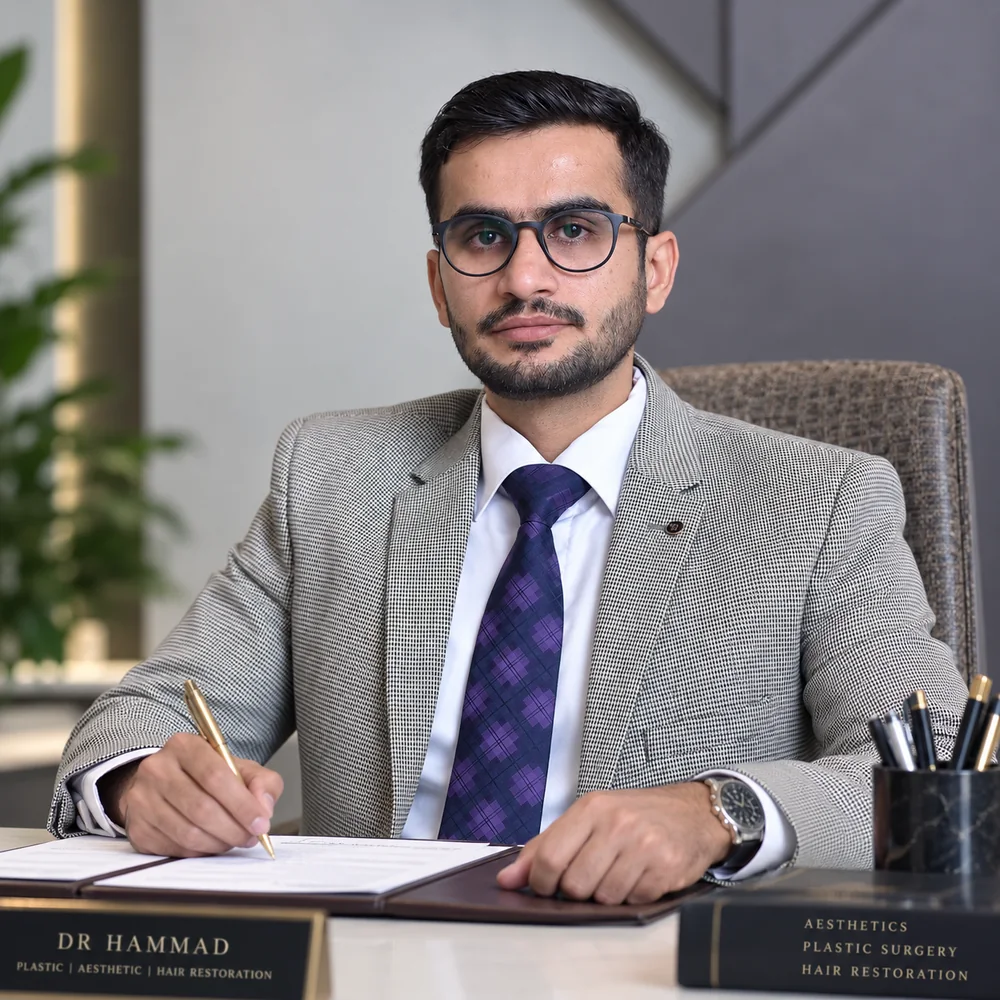
Dr Muhammad Hammad SaleemMBBSMasters in Plastic Surgery — King Edward Medical University15+ Years ExperiencePlastic Surgeon in LahoreHair Restoration • Plastic Surgery • Aesthetic TreatmentsPrivate Consultations in Model Town, LahoreIndividual Assessment • Clear Treatment PlanningCall / WhatsApp 0348-0203999
Dr Muhammad Hammad SaleemMBBSMasters in Plastic Surgery — King Edward Medical University15+ Years ExperiencePlastic Surgeon in LahoreHair Restoration • Plastic Surgery • Aesthetic TreatmentsPrivate Consultations in Model Town, LahoreIndividual Assessment • Clear Treatment PlanningCall / WhatsApp 0348-0203999
Who Performs Your Hair Transplant? Surgeon & Team Roles
Before booking a hair transplant, confirm who will diagnose your hair loss, assess the donor area, design the hairline and carry out each surgical step. This guide focuses on procedure responsibility and credential checks—not on ranking one clinic or surgeon against another.
Check the doctor's registration, listed qualifications and current licence record rather than relying on advertising alone.
Procedure responsibilityAsk who performs each step
Clarify who assesses, designs, extracts, creates recipient sites, places grafts and handles follow-up.
Patient-safety focusClear responsibility at every stage.
Know who is accountable for assessment, surgical planning, the procedure itself and your follow-up pathway before you consent.
CredentialsWho is the named doctor?
Ask for the doctor's full name and registration details so you can verify the public record yourself.
HairlineWho designs the hairline?
Confirm who assesses your face, hair-loss pattern, donor supply and long-term coverage goals.
ExtractionWho harvests the grafts?
Ask who performs donor extraction and how the donor plan is decided for your individual case.
Recipient sitesWho creates the recipient sites?
Clarify who decides the angle, direction and distribution of the sites where grafts will be placed.
PlacementWho places the grafts?
Ask what the doctor does personally and what tasks are performed with clinical-team support.
Follow-upWho handles aftercare?
Know who you can contact about healing, unexpected symptoms and longer-term growth after the procedure.
A patient-first decision
A good result starts with clear responsibility.
Hair transplantation involves diagnosis, donor planning, surgery and follow-up. A clinic name or consultation alone does not tell you who performs each part of the procedure.
01 · CredentialsVerify the doctor
The PM&DC public register lets you review licence validity and registered qualifications. Check the record rather than relying on an advertisement alone.
02 · Surgical roleAsk who does each step
Ask who assesses your hair loss, plans your hairline and donor area, extracts grafts, creates recipient sites and performs placement.
03 · AccountabilityKnow the follow-up plan
Ask who you can contact about healing, unexpected symptoms and longer-term growth, and whether the proposed graft plan follows an actual donor assessment.
Six questions to take to consultation
Your procedure-team checklist.
These questions work whether you are comparing clinics in Lahore or planning your visit from elsewhere in Pakistan.
01Who is the named doctor?
Ask for their full name and registration number so you can verify the public record yourself.
02What qualifications are registered?
Check the doctor's listed qualifications and ask about training and experience relevant to hair-restoration surgery.
03Who designs the hairline?
Confirm who assesses your face, hair-loss pattern, donor supply and long-term coverage goals.
04Who performs the surgical steps?
Ask separately about donor extraction, recipient-site creation and graft placement. Do not assume the consultation and procedure team are identical.
05How is the graft plan decided?
Ask for a realistic estimate based on your donor area, recipient area and future hair-loss pattern—not a guaranteed number from a photograph alone.
06Who handles follow-up?
Ask for written aftercare guidance and a clear contact pathway if you have concerns during recovery.
In this short video Dr Hammad discusses surgeon qualifications and why patients should ask who actually performs their procedure.
Doctor video · 2 minutesQuestions worth asking any clinic
Use the video to frame your consultation questions. It is not an assessment of any named clinic or a substitute for checking a doctor's current record yourself.
Dr Muhammad Hammad Saleem is a certified plastic surgeon and certified hair transplant surgeon and is registered with PM&DC. He personally assesses the donor area, plans the hairline and graft requirement, and performs FUE extraction, recipient-site creation and graft placement, with clinical team support where appropriate.
Procedure responsibilityDr Hammad's role
As a certified plastic surgeon and certified hair transplant surgeon, Dr Hammad personally performs the surgical FUE steps described above. The individual plan and clinical-team support are discussed during consultation.
The aim is simple: know who is responsible, verify the record and understand the plan before you consent.
RegistrationHow can I check whether a doctor is registered in Pakistan?
Search the official PM&DC practitioners register by registration number, full name or father's name. Review the licence validity and registered qualifications shown there.
ConsultationDoes meeting a doctor mean that doctor will perform my transplant?
Not necessarily. Ask who will be present on the procedure day and who performs hairline design, donor harvesting, recipient-site creation and placement.
PriceShould the lowest price decide which clinic I choose?
Price matters, but it does not tell you who will operate, whether the graft plan fits your donor area or what follow-up is included.
Dr Hammad AestheticWho performs FUE at Dr Hammad Aesthetic?
Dr Muhammad Hammad Saleem personally performs the FUE procedure, with clinical team support where appropriate. See the dedicated FUE page for procedure details.
Treatment choiceHow do I know whether I need FUE, Hair PRP or another option?
Start with the Hair Restoration comparison guide, which explains how surgical and non-surgical pathways differ. The appropriate option still needs individual assessment.
Continue your research
Three questions. Three focused guides.
Choose the guide that matches your next question—treatment choice, FUE procedure details or Dr Hammad’s profile.